
Havarti: There’s a lot of heritage in those little holes
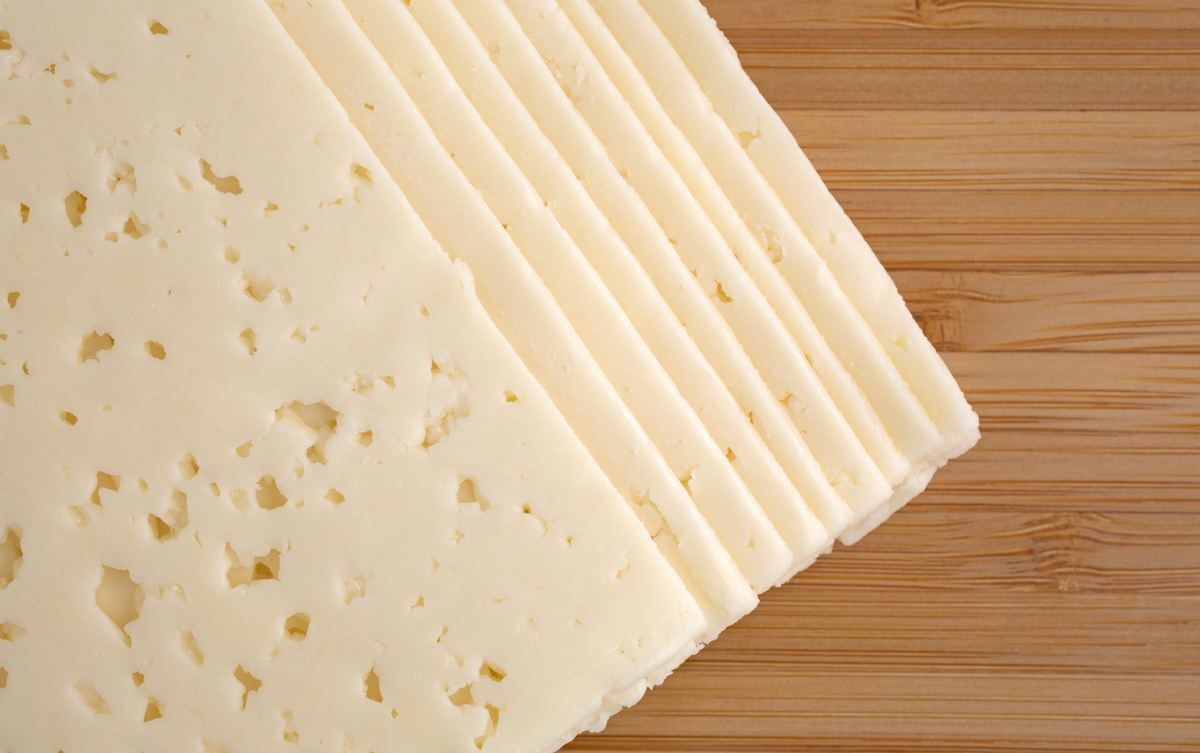
Different cultures make for different cheeses — and by “cultures,” of course, we mean both geographic regions and the microbes used to create the unique flavors and textures of your favorites. In the case of Havarti — one of the most famous Danish cheeses — the cultures added include those for flavor and one to create its signature holes. Havarti was originally created in Denmark by Hanne Nielsen, a 19th-century innovator who, while certainly not the first woman to dabble in the cheese arts, was one of the earliest noted for her contributions. Nielsen’s original technique yielded a softer, smearable version of the Havarti we know today; over the decades, the recipe and methods have been reworked to culminate in a buttery, slightly sweet cheese scattered throughout with small holes. These are a result of a chemical reaction during the cheesemaking process, similar to the larger holes that form in Swiss cheese.
While Havarti is named after the farm where Nielsen developed her method, the name soon went into use everywhere the cheese was produced. In 2019, the European Union’s Protected Geographical Indication rights were invoked for Harvarti after a concerted effort by Denmark’s cheese industry. That meant only cheese from the Danish point of origin could be labeled “Havarti.” However, that decision was revoked after international pushback and cheeses made outside of that geographical region can again be called Havarti as well.
No matter what you call it, Havarti’s mild but distinctive flavor complements everything from dill (a classic combination — dill is a ubiquitous herb in Scandinavian cooking) and chili peppers. That’s why Hoard’s offers three options: traditional Island Havarti, dill-infused, and Fuego, which is made with a mixture of habanero and jalapeño peppers.