
The slice is right
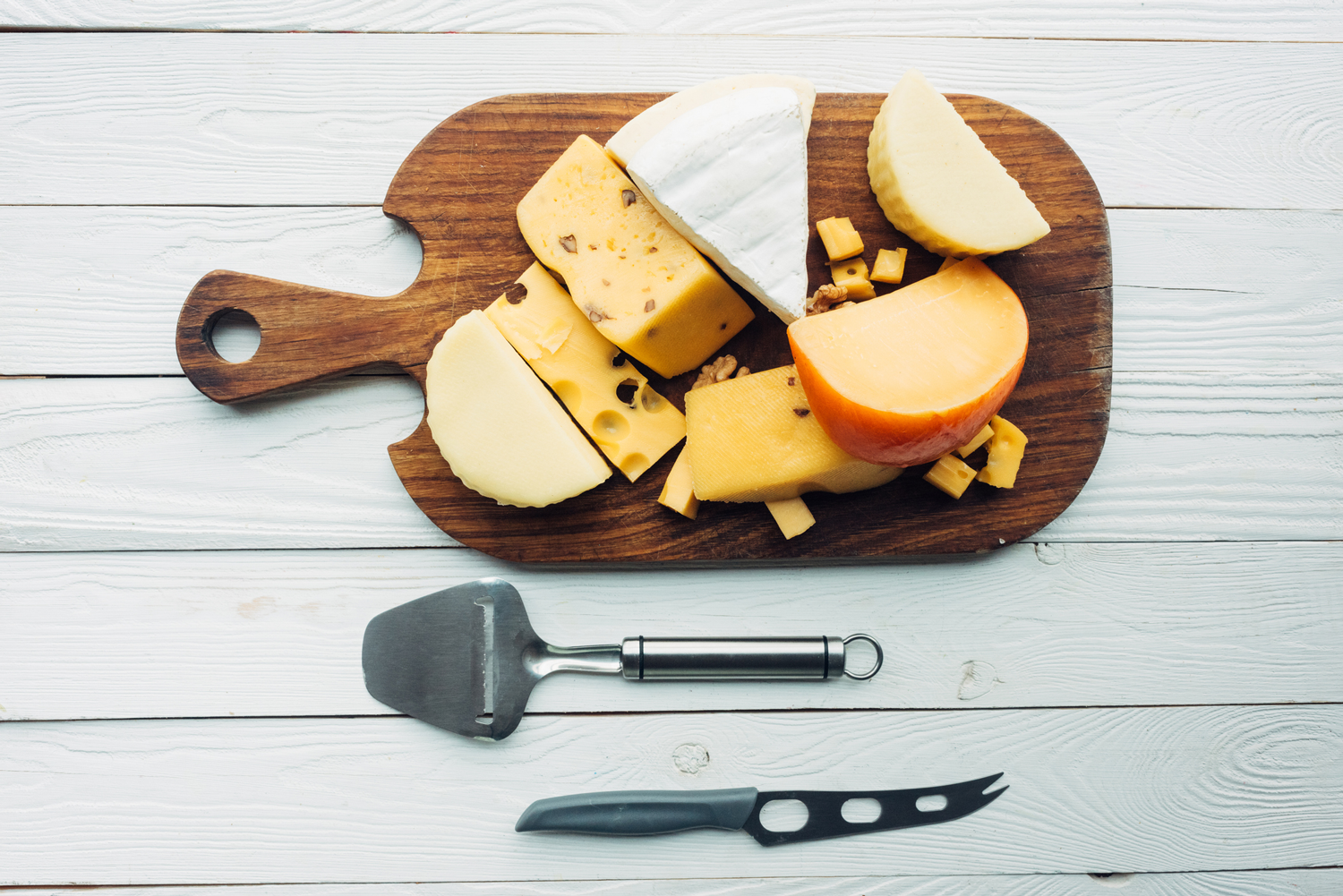
Whether you’re snacking in your pajamas or hosting a fancy get-together, chances are that cheese is on the invite list. And if you’ve ever found yourself — in either scenario — hacking away at a wedge of Cheddar with a butter knife, we’re not here to judge: no matter how you slice it, cheese is a welcome addition at any time. But there’s a better way to slice and serve your favorites, and it’s not a matter of etiquette. It’s plain old physics. Soft, semi-soft, and hard cheeses should be matched to the right style cutter. Moisture level and density can make a mess of a bad blade-variety combination.
Here’s the scoop, or more accurately, the slice:
For firm cheeses, you’ll want a sturdy blade with an easy-to grip handle. The cheese plane (pictured at the top of the above photo) is a great choice; it strips off thin ribbons of Cheddar, Gouda, and even Parmigiano-Reggiano. It was invented in the 1920s by a Norwegian cabinetmaker; legend has it that he was inspired by the carpenter’s plane, a tool of his craft. The design has proven effective and hasn’t changed much over the years. Start with a slightly chilled brick of cheese and you’ll be planning like a pro in no time.
For semi-soft cheeses like Havarti and young Butterkase, try a cheese knife that has holes, like the one in the photo. These open-surface blades prevent softer, cheeses from sticking to the blade and stopping you mid-slice. The “grab” you feel when using a regular blade is created by a vacuum effect, and those holes break up the contact between knife and cheese. Another option, not pictured, is a wire slicer; they work well for cheeses in between soft and firm.
For soft cheeses, look for a thin, curved blade; anything heavy or thick will crush cheeses like Camembert and Brie. You’ll find that many of these cheese knives have a forked tip as seen in the open-surface blade in the photo — manufacturers will often combine these features into an almost all-purpose blade.