
Choose cheese for dessert

The current demand for protein may be a relatively new food trend, but there’s an old-school way to cut your carb and sugar consumption and still come away from the dinner table without feeling cheated. Instead of an overly sweet treat after dinner, explore the traditional cheese plate. Combined with some artfully arranged fresh or dried fruit, almonds, pecans, or walnuts, and perhaps a few pieces of cocoa-heavy dark chocolate, a curated selection of good cheeses means you’ll never miss that slice of cake or pie ala mode.
When it comes to pairing cheese, fruit, and nuts, experts recommend starting with cheese and working your way out to accompany your selections with classic — or surprising — choices. For a crowd-pleasing variety, build your dessert plate on four cheese types:
Robust and rich. Here, you want a cheese that delivers flavor, texture, and umami. Cheddar is a great choice, as even its aged, sharp versions are familiar and appreciated: Most folks are conversant in Cheddar. It plays well with fresh and dried fruits, but apples and Cheddar are a classic duo — for a striking contrast, try Cortland apples; their juicy, crisp texture will set off your Cheddar to perfection.
The kind with a rind. Cheeses like Camembert and Brie are aesthetic and culinary winners for cheese plates. The beauty of that white rind against the creamy interior are an indicator — even to the uninitiated — that deliciousness awaits. Fans of edible-rind cheeses know that they shine when paired with dried fruits such as figs, dates, and apricots. And you can lean into the dessert-plate theme by pairing Camembert with walnuts and a little drizzle of honey.
Mild mannered. For every dessert served, there’s always a picky palate to protest. For those whose tastes run more to vanilla than chocolate, select a mild cheese with universal appeal. Creamy, buttery varieties like Muenster, Hoard’s Dairyman Farm Creamery Belaire, or a can’t miss Butterkase fit the bill here. They also pair well with just about any fruit: cool, juicy grapes or orange wedges are a refreshing option.
The X factor. For the adventurous, offer a cheese and some accompaniments that mix it up. These days, many cheesemakers are chasing flavor profiles that take advantage of the product’s inherent rich, creamy textures by adding ingredients with a kick. A little heat from jalapeño or habanero peppers (or both!) can elevate a cheese to epic. Paired with a good dark chocolate, this fusion will delight your more daring guests.
For more pairing ideas, check out Hoard’s Dairyman Farm Creamery’s product page.
It’s Cheddar Weather

Summer is going fast, but there’s still plenty on the outdoor activity schedule and it won’t stop with Labor Day. Whether you’re headed to the park, the game, or the block party, you’ll probably be bringing provisions, and if you’re like many foodies, by “provisions” you mean a variety of crowd pleasers. But when the sun’s beating down and the cooler ice is rapidly melting, which cheeses are your best bet? Sure, they’d all be welcome on the picnic table, but some cheeses make better traveling companions than others.
So which is best suited for your summer shenanigans? Cheddar comes in at the top of our list. It hits all the marks:
It travels well. Cheddar’s production process yields a firmer, drier cheese, which makes it a great companion when you’re hitting the road. It’ll keep its texture in warmer temps, making it easier to cut and serve. The lack of moisture could also help keep bacteria at bay, though you’ll still want to follow food safety rules, including keeping your Cheddar in an insulated cooler until you’re ready to serve it and not leaving it out for more than an hour in warmer conditions. But let’s face it: this stuff is so tempting, it’s not going to last long — which leads us to our next motive for choosing Cheddar:
Just about everyone likes it. Ever since the 1800s, when Englishman Joseph Harding fine-tuned the Cheddar-making process, the variety has dominated consumption in many parts of the world. In fact, the United States Department of Agriculture has gone on record calling it the world’s most popular cheese. And while pizza’s ubiquitous presence has pushed Mozzarella to the top of the U.S. charts, Cheddar isn’t far behind. In 2022, USDA estimated that the average domestic Cheddar consumption was a whopping 11.37 pounds per capita. With those stats in mind, you can’t go wrong with one (or more!) Cheddar choices in your cooler.
It matches your menu. Put it on sandwiches, burgers, and charc boards with fruit, nuts, and your favorite crackers. Whether you’re planning an elegant picnic for two or a grill-and-gather at the park, Cheddar will complement the menu. From young to aged, mild to sharp, its melty goodness and tangy, unmistakable flavor will elevate the occasion. As a bonus, Cheddar can even pair well with dessert: It’s a classic accompaniment to apple pie.
Beverage pairings come naturally. Sure, Cheddar goes well with its traditional pourable pairings like pinot noir and pale ale, but with the explosion of flavored seltzers out there, why not match your Cheddar-forward meal with cranberry, cucumber, or black cherry soda water? The rich, tangy umami of Cheddar also hits the spot with good old-fashioned iced tea.
Check out Hoard’s Dairyman Creamery Cheddars, along with our other award-winning cheese varieties, here.
Todays Featured Cheese: Aged White Cheddar
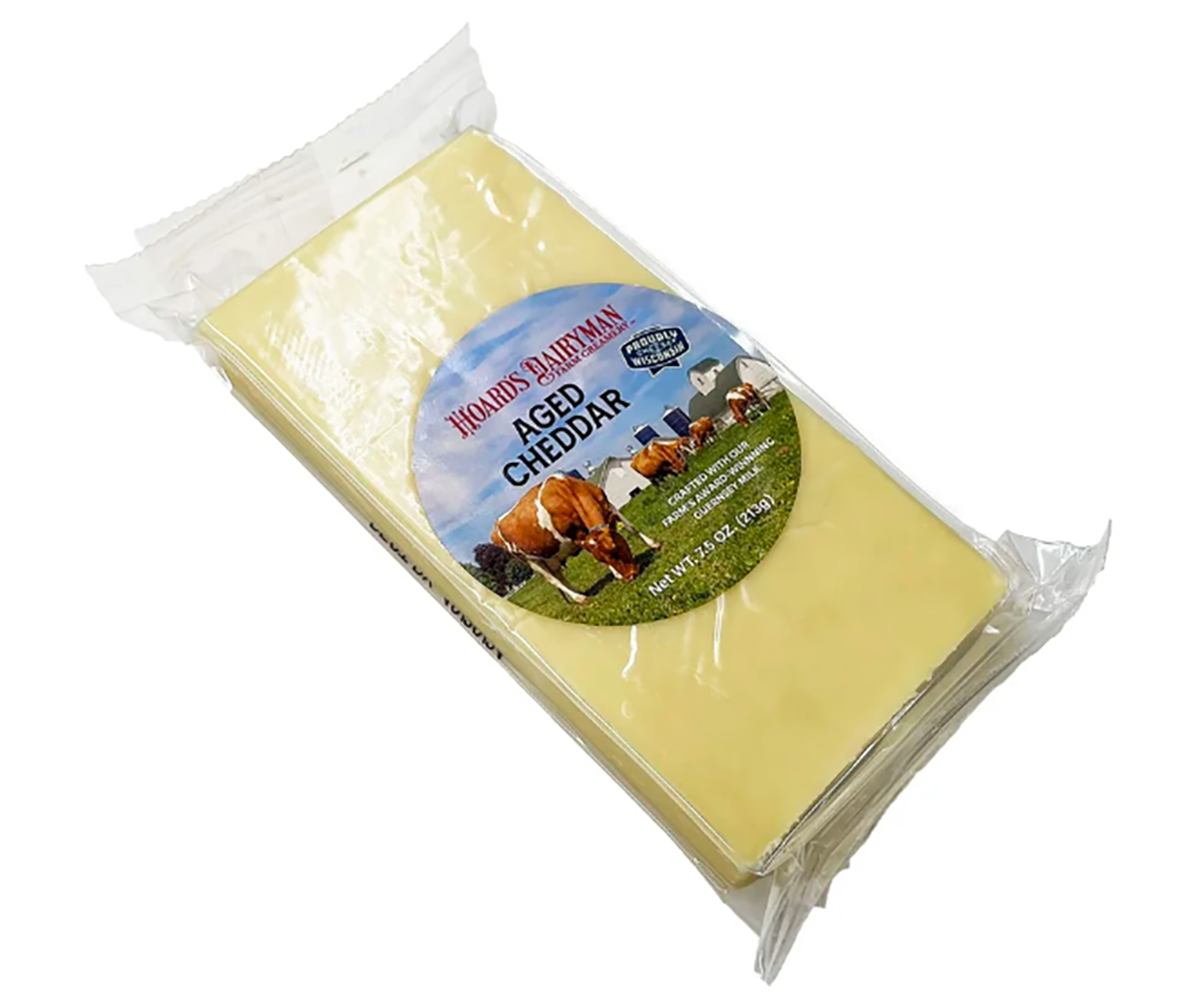
This Aged White Cheddar is a favorite for its bold flavor and everyday versatility. Made with milk from our farm, it has a smooth crumbly texture and a rich savory taste that stands out without overpowering. It’s great on a cheese board, melted into comfort food, or sliced thick for sandwiches. Try it with crisp apples or pears, toasted nuts and crusty bread. It also pairs well with dry cider, pale ale or a bold red wine. Simple and full of flavor, this is cheddar you’ll keep coming back to. Order your Aged White Cheddar cheese here today!
Quiz Time!
About how many gallons of milk does it take to produce one pound of cheese?
a. 2.5 gallons
b. 1.25 gallons
c. 10 gallons
d. 4 gallons
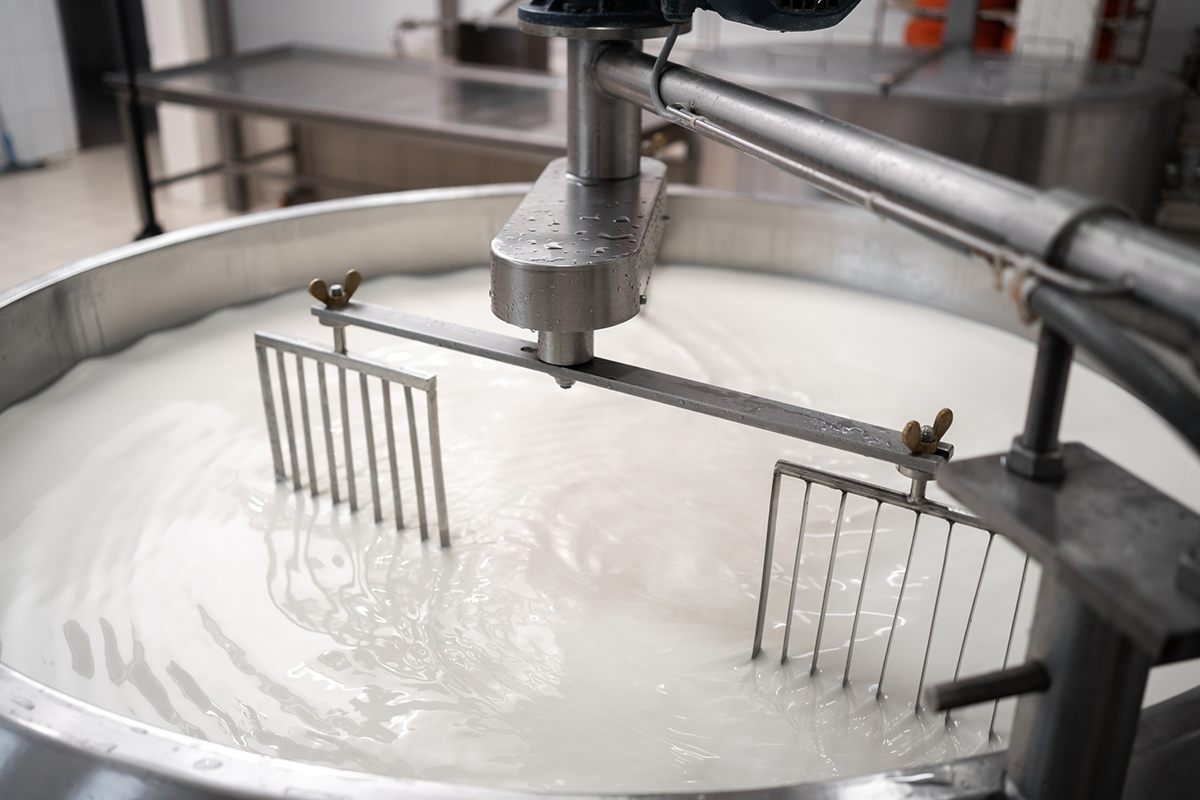
If you guessed 1.25 gallons you are correct!
Awards for Hoard’s: Farm Creamery cheeses win over tough judges

Every dairy enthusiast knows that cream rises to the top — but cheese can make it up there, too. Every year, the lucky experts at the American Cheese Society (ACS) get to taste and evaluate some of the nation’s best cheeses — upwards of 1,600 entries in varieties that range from curds to Colby, Muenster to Mozzarella, and everything in between. And although that may sound like the ideal gig, rest assured these lab-coated judges take their duties seriously: cheeses are evaluated based on technical and aesthetic aspects — flavor, texture, aroma, visual appeal, and more. Each cheese earns technical and aesthetic scores based on its merits, rather than pitting product against product; that way, every sample is given a fair shake. And with more than 120 categories, there’s a place on the metaphorical charcuterie board of competition for all.
This year’s competition garnered two awards for Hoard’s Dairyman Farm Creamery cheese, which is crafted from the Wisconsin herd’s Guernsey milk:
Governor’s Select Cheddar, which already made the podium in a previous ACS competition, took this year’s third place prize among cow’s milk Cheddars aged through 12 months. In this category, ASC’s Standards of Excellence include hitting just the right balance of sweet, nutty, salt, and acid in the cheese’s flavor profile. Texture, body, and moisture level also needed to be on point; the process to make Cheddar requires care to achieve all three. Hoard’s Governor’s Select Cheddar’s advantage might just lie in the Guernsey milk used to achieve its creamy consistency and savory taste.
Also scoring high for both its flavor and presentation is Hoard’s Dairyman Farm Creamery Port Salut-style Belaire Cheese. In the Open Category for American-Made, International-Style cheeses, this mild, rich cheese took third place. Here, the expert evaluators were in search of cheeses with clean, cows’ milk flavor and saltiness that didn’t overpower the classic expected flavors of the variety. Port Salut-style cheeses such as Belaire should be soft with a mild, appealing flavor that was first perfected by the 19th-century Trappist monks of Port-du-Salut in Entremmes, Brittany. Hoard’s version not only pleased the tasting judges but also scored high for its aesthetic appeal — it has a buttery yellow interior with a bright orange rind, a classic Port Salut appearance made even more distinctive by Guernsey milk.
Hungry for more? Check out our variety of cheeses, learn the history behind the Guernsey cows that make up our herd, and find cheese-centric recipes that’ll hit the spot.
Today’s Featured Cheese: BELAIRE
BELAIRE: PORT SALUT-STYLE CHEESE
Our Belaire, Port Salut (POR sa-LOO) -style variety is an exquisite, mild, and classic cheese that’s easy to eat and will quickly become one of your favorites. Its creamy, subtle flavor and soft texture make it an ideal cheese for formal occasions or a Sunday afternoon on the patio.
Belaire’s welcoming pale yellow interior is highlighted with a distinctive bright orange rind. Slice and enjoy on its own, with a cracker, or with fruit. Pair with a white wine for an extraordinary experience.
Trappist monks in the French coastal province of Brittany created the original Port Salut variety in the early 19th century. Today master cheesemakers are crafting our Belaire Port Salut-style cheese from rich, pure Guernsey milk that comes exclusively from the Hoard’s Dairyman Farm. Order your Belaire cheese here today!

Quiz Time! Wisconsin Edition.
What city in Wisconsin is known as "the cheese capital of the world"?
1) Monroe
2) Sheboygan
3) Plymouth
4) Madison

If you guessed answer 3) Plymouth, you are correct!
Quiz Time! Ice cream edition.
What is America's favorite ice cream flavor?
Neapolitan
Strawberry
Chocolate
Vanilla

If you guessed 4. Vanilla, you are correct!
Dairy brings more than just nutrition to the table (but it is pretty nutritious)

It’s National Dairy Month and you know what that means: It’s socially acceptable to eat ice cream every day!
Well, maybe not every day. But what better time of year to break out that aged parmesan you’ve been saving or your family’s secret fettuccini recipe or that ice cream maker you promised you’d put to use?
June Dairy Month has been an annual commemoration of dairy farmers and their cows since 1937 and is a celebration of the way dairy foods boost our nutrition, culture, economy, and history.
Don’t believe it does all that? Keep reading.
Nutrition
Dairy’s nutritional value is indisputable. Even if one is lactose intolerant, they can often find reprieve in consuming dairy products that are “lactose free.”
Dairy products contain essential vitamins and nutrients we need such as calcium, potassium, vitamin A, and protein. Americans are encouraged to eat three servings of dairy foods per day to stay ahead of long-term health concerns such as diabetes and cardiovascular disease.
Thanks, cows!
Culture
Dairy foods play a significant roll in American culture. Cheese in particular (thanks to Social Media’s aesthetic elevation of charcuterie boards—but even before that) is an unspoken must-serve at social gatherings, from holiday get-togethers to wine tastings to watch parties and everything in between.
If you aren’t a fine wine and cheese board fan, odds are you still consume dairy by way of cheeseburgers, mac and cheese, pizza, whole milk iced lattes, ice cream sundaes, or myriad other iconic American milk-based dishes. There’s no escaping the udder!
Economy
According to the International Dairy Foods Association (IDFA), the dairy industry supports more than 3 million U.S. jobs and $198 billion in wages. That’s a lot of labor!
The IDFA has also reported that dairy contributes more than $779 billion annually to the U.S. economy.
Their website states, “[This] economic activity stays close to home, powering main streets, supporting small businesses, and helping rural America thrive. Dairy businesses are the lifeblood of American communities, and they share a commitment to giving back to those local communities they operate in.”
Okay, milk!
History
Dairy farms and farmers run deep in the United States of America.
Like, four centuries deep.
Historical records with the National Agriculture Library have it that dairy has been a part of American livelihood since the early 1600s. With all that ancestral dairying just waiting to be lived up to, what’s stopping us from supporting dairy farmers both down the road and across state lines?
Modern family farm legacies in the dairy industry run deep, too. Aren’t sure of the ones in your area? Do a quick internet search to discover what lasting legacies lie next door. Who knows—you might become inspired to start your own dairy operation.
(At the very least, we’ll bet you’ll be inspired to purchase a sweet or savory milk-based treat. Either way, we thank you for your support.)
Because of all these benefits dairy brings, and more, the food group and its producers can be celebrated every day of the week and every week of the month! (We aren’t biased...)
Join in on some final June Dairy Month celebrations this weekend, and share your favorite dairy-filled recipes with us by sending them to katiec@hoardscreamery.com.
Today’s Featured Cheese: Aged White Cheddar

This month, we’re proud to spotlight our 3-Month Aged Cheddar—a young, vibrant cheese that strikes the perfect balance between creamy and bold. Aged just long enough to develop a rich, nutty flavor with a subtle tang, this cheddar is a versatile favorite for snacking, melting, or pairing with fresh fruit and crisp lagers. Its smooth texture and approachable bite make it a standout on any cheese board. Order yours today and see why it’s earned its place as our featured cheese!